
The peptides with the strongest medical evidence do not deliver growth hormone. They tell the pituitary to release its own, which is why the GH axis stays self-regulated through somatostatin feedback.
Peptide therapy is the clinical use of short amino acid chains to signal one specific pathway in the body rather than to replace a hormone outright. A peptide is a sequence of amino acids shorter than a full protein. In medicine the peptides with the strongest evidence act on the GH axis, prompting the pituitary to release growth hormone on its own schedule instead of injecting growth hormone directly [1][9].
- The core medical peptides act on the GH axis: sermorelin, CJC-1295, ipamorelin, and tesamorelin
- GHRH analogs (sermorelin, CJC-1295, tesamorelin) mimic natural GHRH; GHRPs (ipamorelin) act through a separate receptor
- Sermorelin is the first-line GH-axis peptide; ipamorelin is the preferred GHRP because it does not raise cortisol or prolactin [3]
- Only tesamorelin is FDA-approved, and only for HIV-associated visceral fat; the rest are compounded, not approved [10][12]
- A baseline IGF-1 draw before prescribing is the marker of a legitimate program. Skipping it is a red flag
That distinction is the whole point. A GH-axis peptide asks the pituitary to work. Exogenous HGH replaces the pituitary. Everything else about how these programs run, who they suit, and what they cost follows from that one difference.
What Peptide Therapy Actually Is
A peptide signals. It does not replace. This is the line that separates peptide therapy from hormone replacement, and it is worth holding onto because marketing pages blur it constantly. Sermorelin, the most prescribed GH-axis peptide, is a 29-amino acid fragment that binds pituitary GHRH receptors and stimulates the gland to secrete its own growth hormone [1].
Because the pituitary stays in the loop, somatostatin feedback keeps output within a physiologic range, which makes GH oversaturation difficult to reach at standard doses [9]. Exogenous HGH bypasses that safeguard entirely. Two families of peptide act on the GH axis, and understanding the split is most of what you need to read a program critically.
The GH-Axis Peptides at the Core
Four peptides carry the bulk of the clinical evidence for GH-axis therapy. Three are GHRH analogs and one is a GHRP. Sermorelin is the default starting point; the others solve specific problems around dosing frequency, receptor selectivity, or a documented visceral fat indication. For fat loss specifically, the tradeoffs between them are ranked in the best peptides for weight loss comparison.
| Peptide | Class | What it does | Typical role |
|---|---|---|---|
| Sermorelin | GHRH analog | Stimulates pituitary GH release; half-life about 11 to 12 minutes [1] | First-line GH-axis restoration |
| CJC-1295 | GHRH analog | Longer-acting GHRH signal; half-life measured in days [4] | Fewer injections while GH stays pulsatile [5] |
| Ipamorelin | GHRP (secretagogue) | Selective GH release with no cortisol or prolactin rise [3] | Stacked with a GHRH analog |
| Tesamorelin | GHRH analog | FDA-approved for HIV-associated visceral fat [12] | Documented visceral and abdominal fat reduction [7] |
Sermorelin and CJC-1295 do the same job on the same receptor; the difference is duration. CJC-1295 was engineered so the GHRH signal persists over days rather than minutes, and study of the modified analog showed sustained GH and IGF-1 elevation while GH secretion remained pulsatile [4][5]. That means fewer injections without flattening the natural rhythm the pituitary depends on.
Two Families: GHRH Analogs and GHRPs
GHRH analogs and GHRPs reach the same endpoint through different doors. GHRH analogs mimic the hormone that tells the pituitary to release GH. GHRPs, more precisely growth hormone secretagogues, act on the ghrelin receptor to amplify that release. Ipamorelin is the GHRP of choice because it triggers GH without the cortisol or prolactin spillover seen with older secretagogues [3].
The two families are often combined because they are additive. Giving a GHRH analog and a GHRP together produces a larger GH pulse than either alone, an additive effect documented when GHRH and a GHRP were co-administered in controlled study [8]. A sermorelin plus ipamorelin protocol is the most common expression of that logic.
- GHRH analogs (sermorelin, CJC-1295, tesamorelin): mimic natural GHRH at the pituitary
- GHRPs / secretagogues (ipamorelin): act through the ghrelin receptor to amplify the GH pulse
- Combined, the two families produce a larger GH release than either on its own [8]
- Both families preserve pulsatility, unlike a direct HGH injection
How Telehealth Peptide Therapy Works
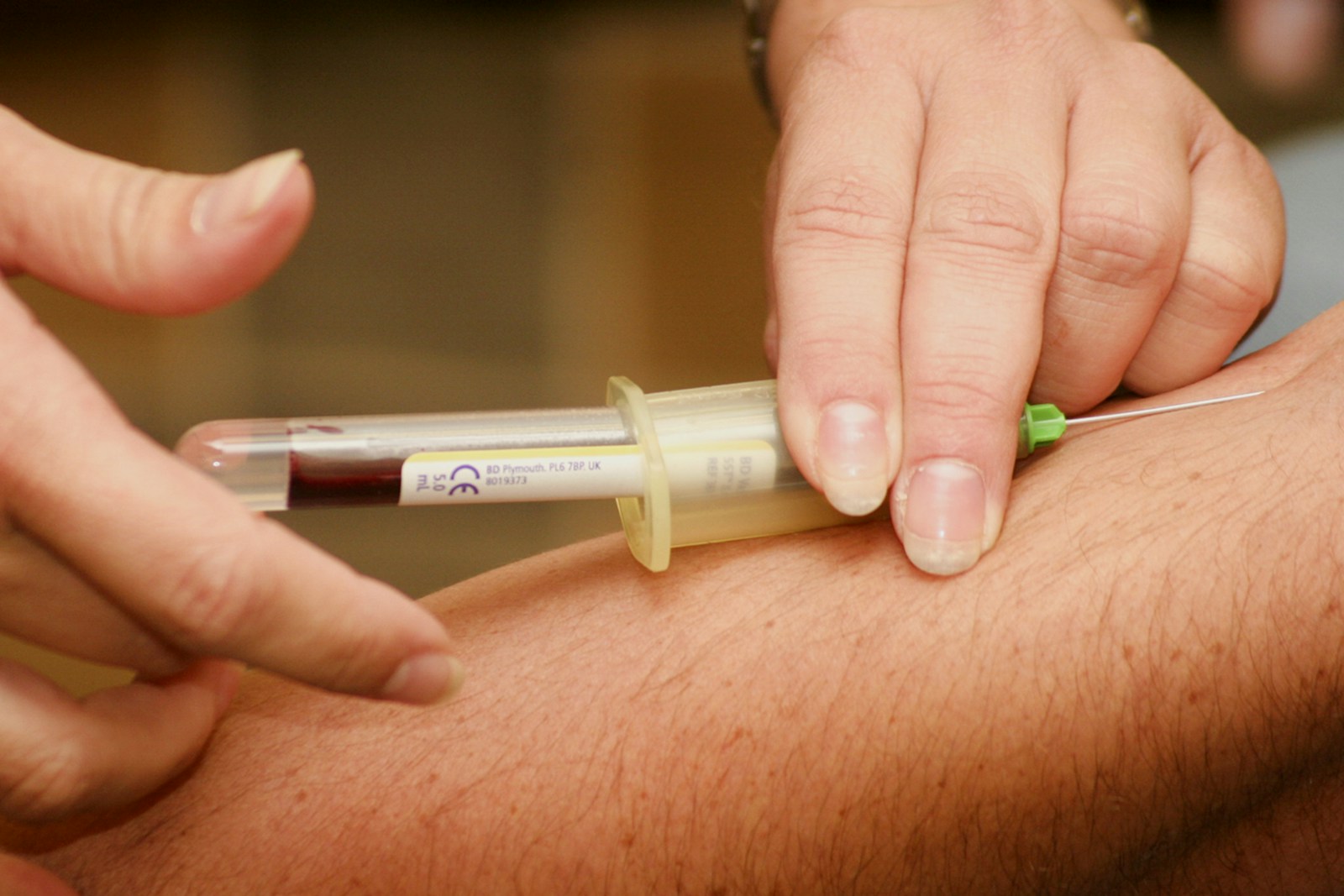
A legitimate telehealth peptide program follows the same clinical sequence a good in-person clinic would. The single most reliable quality signal is whether the program orders a baseline IGF-1 before writing a prescription. Any platform that moves from an intake form to a shipped vial without lab work is not practicing medicine. That same sequence explains what peptide therapy costs, since the labs and the pharmacy, not the peptide, drive most of the price.
- Intake and medical history, including current medications and contraindications
- Baseline IGF-1 lab draw to establish whether the GH axis is actually low
- Physician review and, if indicated, a prescription for a compounded peptide
- Compounding by a licensed 503A or 503B pharmacy, shipped to the patient
- Self-administered subcutaneous injection at bedtime, aligned with the natural GH pulse
- Retest IGF-1 at about 90 days to assess dose response and adjust
- Evaluate outcomes over a minimum 6-month protocol before judging results
Who Peptide Therapy Is For
GH-axis peptide therapy targets adults with age-related decline of the GH axis, not pathologic GH deficiency from pituitary disease and not healthy people chasing supraphysiologic levels. The candidate profile is a documented low or low-normal IGF-1 paired with symptoms consistent with GH decline. In long-term study of a GHRH analog in older adults, IGF-1 rose and lean body mass increased in men over 16 weeks [2]. The same class reduces visceral fat over roughly 6 months in pooled human data [6]. That is a body-composition change, not the fast scale drop people expect from peptides marketed for weight loss, and it works through a different mechanism than the GLP-1 medications. How the axis responds also differs by sex, which is why protocols read differently for men and women.
- Adults over 30 with documented low or low-normal IGF-1 on a baseline draw
- Symptoms consistent with GH decline: poor slow-wave sleep, reduced lean mass, rising visceral fat, slow recovery
- Not for active malignancy or known pituitary tumor
- Not a substitute for treating low testosterone, hypothyroidism, or a caloric deficit
- Not for anyone subject to anti-doping testing, since GHRH analogs and secretagogues are banned at all times [11]
Compounded, Not Approved: The Regulatory Reality
Only tesamorelin holds an active FDA approval, and only for HIV-associated lipodystrophy [12]. Sermorelin, CJC-1295, and ipamorelin are prescribed as compounded preparations, which means the FDA does not verify their safety, effectiveness, or quality before they are marketed [10]. That is not a reason to avoid them, but it is a reason to know which pharmacy fills the prescription. That choice, plus the side-effect profile and how to buy safely, matters more than the peptide name on the label.
A 503B outsourcing facility is subject to current good manufacturing practice requirements; a 503A pharmacy is not [10]. Both are lawful. Ask which one compounds your peptide and whether a Certificate of Analysis is available for your lot.
One more constraint is worth stating plainly. Every peptide in this class is prohibited in competitive sport. The World Anti-Doping Agency lists growth hormone releasing factors, including GHRH analogs and their releasing peptides, as banned at all times [11]. If you are tested, none of these are an option.
SystemLabs requires a baseline IGF-1 before prescribing and builds sermorelin, ipamorelin, and CJC-1295 protocols around the result. That is the sequence a legitimate peptide program follows.
Bottom Line
Frequently Asked Questions
What is peptide therapy?
Peptide therapy is the clinical use of short amino acid chains to signal a specific biological pathway. The best-evidenced medical peptides act on the GH axis, prompting the pituitary to release its own growth hormone rather than injecting growth hormone directly [1][9]. Sermorelin, CJC-1295, ipamorelin, and tesamorelin are the core GH-axis peptides.
What is the difference between a GHRH analog and a GHRP?
A GHRH analog such as sermorelin, CJC-1295, or tesamorelin mimics natural GHRH at the pituitary. A GHRP, or growth hormone secretagogue, such as ipamorelin acts through the ghrelin receptor to amplify the same GH release. Given together they produce a larger GH pulse than either alone [8], which is why sermorelin and ipamorelin are commonly stacked.
Is peptide therapy FDA approved?
Only tesamorelin holds an active FDA approval, and only for HIV-associated visceral fat [12]. Sermorelin, CJC-1295, and ipamorelin are prescribed as compounded preparations, which the FDA does not verify for safety, effectiveness, or quality before marketing [10]. They are legal to prescribe as compounded drugs but do not carry FDA approval.
Which peptide is best to start with?
Sermorelin is the standard first-line GH-axis peptide because it restores GH pulsatility while leaving somatostatin feedback intact [1][9]. Programs often add ipamorelin, the preferred GHRP since it raises GH without a cortisol or prolactin rise [3], or move to CJC-1295 for fewer injections [4]. The right starting point depends on your baseline IGF-1 and goals.
Do I need lab work before starting peptide therapy?
Yes. A baseline IGF-1 draw is required to establish whether your GH axis is genuinely low before treatment, and a 90-day retest measures the response. A program that prescribes without baseline labs cannot tell whether you needed the therapy or whether it pushed you above the normal range. That is the clearest signal of a low-quality provider.
Is peptide therapy allowed in competitive sport?
No. The World Anti-Doping Agency bans growth hormone releasing factors, including GHRH analogs and their releasing peptides, at all times [11]. Sermorelin, CJC-1295, ipamorelin, and tesamorelin are all prohibited for tested athletes.
References
- Sermorelin: a review of its use in the diagnosis and treatment of children with idiopathic growth hormone deficiency BioDrugs, 1999. PMID: 18031173. https://pubmed.ncbi.nlm.nih.gov/18031173/
- Endocrine and metabolic effects of long-term administration of [Nle27]growth hormone-releasing hormone-(1-29)-NH2 in age-advanced men and women Journal of Clinical Endocrinology & Metabolism, 1997. PMID: 9141536. https://pubmed.ncbi.nlm.nih.gov/9141536/
- Ipamorelin, the first selective growth hormone secretagogue European Journal of Endocrinology, 1998. PMID: 9849822. https://pubmed.ncbi.nlm.nih.gov/9849822/
- Prolonged stimulation of growth hormone (GH) and insulin-like growth factor I secretion by CJC-1295, a long-acting analog of GH-releasing hormone, in healthy adults Journal of Clinical Endocrinology & Metabolism, 2006. PMID: 16352683. https://pubmed.ncbi.nlm.nih.gov/16352683/
- Pulsatile secretion of growth hormone (GH) persists during continuous stimulation by CJC-1295, a long-acting GH-releasing hormone analog Journal of Clinical Endocrinology & Metabolism, 2006. PMID: 17018654. https://pubmed.ncbi.nlm.nih.gov/17018654/
- Effects of growth hormone-releasing hormone on visceral fat, metabolic, and cardiovascular indices in human studies Growth Hormone & IGF Research, 2015. PMID: 25555516. https://pubmed.ncbi.nlm.nih.gov/25555516/
- Metabolic effects of a growth hormone-releasing factor in patients with HIV New England Journal of Medicine, 2007. PMID: 18057338. https://pubmed.ncbi.nlm.nih.gov/18057338/
- Growth hormone (GH) secretion in active acromegaly after the combined administration of GH-releasing hormone and GH-releasing peptide-6 Journal of Clinical Endocrinology & Metabolism, 1994. PMID: 8045963. https://pubmed.ncbi.nlm.nih.gov/8045963/
- Sermorelin: a better approach to management of adult-onset growth hormone insufficiency? Clinical Interventions in Aging, 2006. PMC2699646. https://pmc.ncbi.nlm.nih.gov/articles/PMC2699646/
- Compounding and the FDA: questions and answers FDA.gov, Human Drug Compounding, 2025. Content current as of 09/16/2025. https://www.fda.gov/drugs/human-drug-compounding/compounding-and-fda-questions-and-answers
- The 2026 Prohibited List: International Standard, section S2.2.4 growth hormone releasing factors World Anti-Doping Agency, 2026. WADA 2026 Prohibited List. https://www.wada-ama.org/en/resources/2026-prohibited-list
- EGRIFTA SV (tesamorelin) for injection: full prescribing information DailyMed, U.S. National Library of Medicine, 2025. FDA-approved labeling. https://dailymed.nlm.nih.gov/dailymed/drugInfo.cfm?setid=3d783378-b02d-4f19-99dd-0fc91a042224