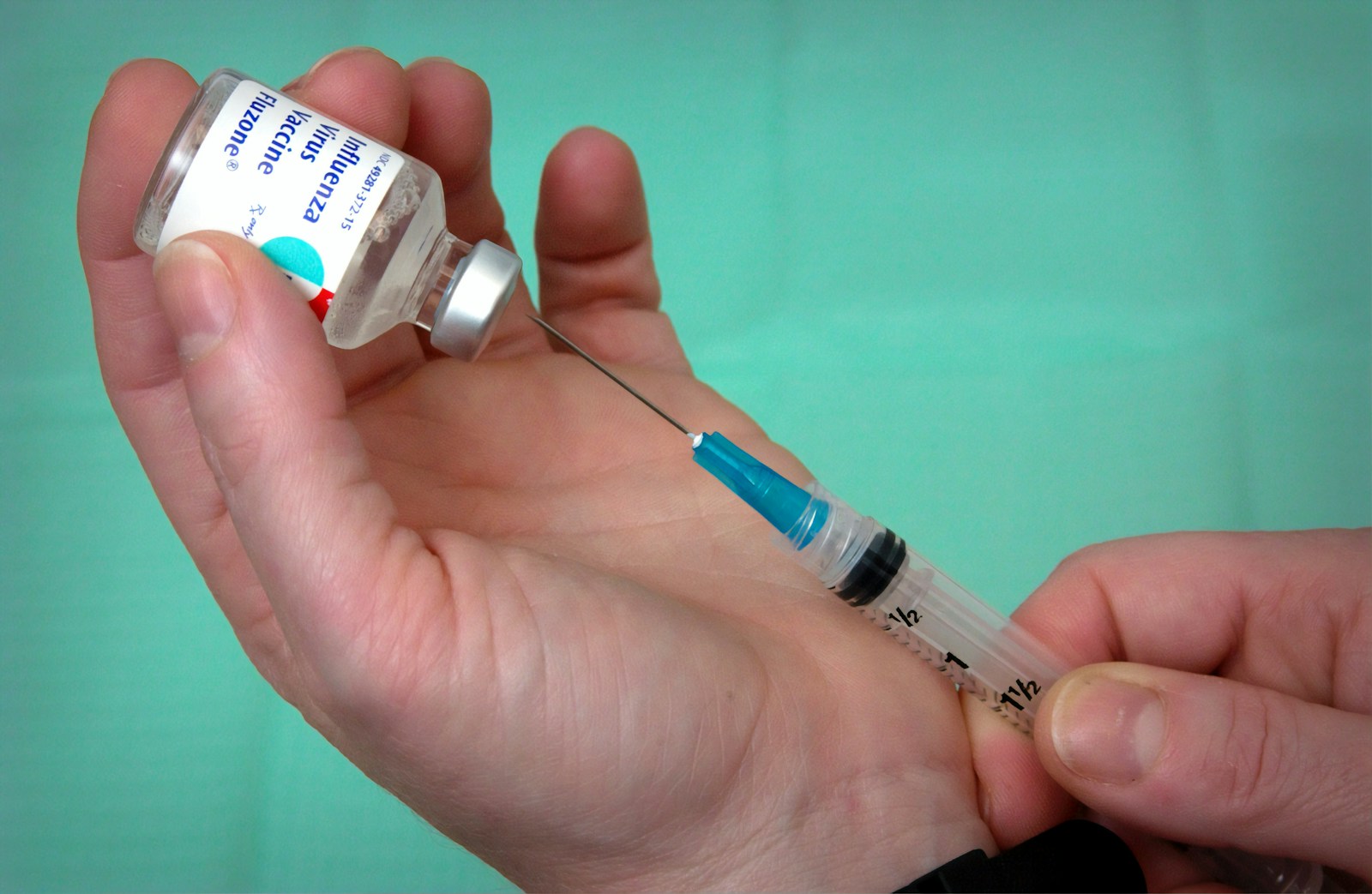

GH-axis peptides and GLP-1 drugs are often lumped together as weight tools, but they barely overlap. GLP-1 agonists cut appetite and take off overall weight, including some lean mass. GH-axis peptides leave scale weight nearly unchanged and instead shift body composition toward less visceral fat.
Peptides and GLP-1 drugs get compared for weight, but they work on different systems and answer different questions. GLP-1 receptor agonists such as semaglutide and tirzepatide act on appetite and satiety, and they are FDA-approved for chronic weight management. The GH-axis peptides, sermorelin and tesamorelin, act on the pituitary to restore a person's own growth hormone, and they are compounded rather than approved for weight loss [1]. Comparing them fairly means being clear about what each one is for. Both belong to the wider conversation about peptide therapy and how peptides for weight loss get marketed.
- GLP-1 drugs (semaglutide, tirzepatide) reduce appetite and are FDA-approved for weight management; GH-axis peptides are compounded and not approved for weight loss
- GLP-1 agonists drive overall weight loss through reduced food intake; GH-axis peptides shift body composition toward less visceral fat and preserved lean mass [2][3]
- Tesamorelin has controlled trial evidence for reducing visceral abdominal fat, but it was studied in a specific population, not for general weight loss [3][4]
- For substantial weight loss, the GLP-1 class has the stronger, approved evidence base; GH-axis peptides target a narrower goal
- They are not interchangeable, and in some programs they are used together for different purposes
Two mechanisms, two goals
GLP-1 receptor agonists work on the gut-brain axis. They mimic a hormone the intestine releases after eating, which slows gastric emptying and raises satiety, so the person eats less. The weight loss is driven by reduced food intake, and it is broad, meaning both fat and some lean mass come off.
GH-axis peptides work on the pituitary. Sermorelin and tesamorelin are GHRH analogs that stimulate the body's own growth hormone [1], and the downstream effect through IGF-1 is a change in body composition rather than a drop on the scale. In pooled human studies, GHRH-analog therapy reduced visceral adipose tissue while preserving lean mass [2]. The two are not doing the same job.
| Factor | GLP-1 agonists (semaglutide, tirzepatide) | GH-axis peptides (sermorelin, tesamorelin) |
|---|---|---|
| Mechanism | Appetite and satiety via the gut-brain axis | Pituitary GH release via GHRH receptors [1] |
| Primary effect | Overall weight loss from reduced intake | Visceral fat reduction, lean mass preserved [2][3] |
| Regulatory status | FDA-approved for chronic weight management | Compounded, not FDA-approved for weight loss [6] |
| What comes off | Fat and some lean mass | Targets visceral and abdominal fat [3] |
| Best suited to | Substantial weight loss | Body composition, central fat, GH-axis decline |
| Anti-doping | Not GH-related | [Prohibited in tested sport](https://www.wada-ama.org/en/resources/2026-prohibited-list) [7] |
What the evidence actually supports
The GLP-1 class has a large, approved evidence base for weight management, which is why it is the first-line pharmacologic tool when the goal is substantial weight loss. That is the honest starting point, and no GH-axis peptide changes it.
The GH-axis evidence is narrower and points at a different endpoint. Tesamorelin reduced visceral abdominal fat in controlled trials [3], and a pooled analysis of two phase 3 trials confirmed the visceral fat reduction [4]. Those trials were run in a specific population with excess visceral fat, not in the general population trying to lose weight. Sermorelin's own controlled data is more modest still: 16 weeks of GHRH(1-29) raised lean mass in men but produced no significant change in fat mass over that window [5]. Read plainly, the GH-axis peptides are body-composition tools, not weight-loss drugs.
If the goal is to lose a large amount of weight, the GLP-1 class is the evidence-backed choice. If the goal is to reduce visceral fat and hold onto lean mass, the GH-axis peptides target that specifically. Choosing by the goal, not the hype, is the whole decision.
Who each one suits
The two answer different questions, so the right choice follows the goal rather than a ranking. If you are sorting the peptide side by goal, the best peptides for weight loss guide ranks them directly.
- GLP-1 agonists suit people whose main goal is substantial weight loss and who can be monitored for the class's gastrointestinal effects
- GH-axis peptides suit people whose main concern is visceral fat and lean-mass preservation, with a baseline IGF-1 to titrate against [1]
- People with GH-axis decline (poor sleep, reduced lean mass, slow recovery) alongside central fat are the clearest fit for a GHRH analog
- Some medical weight-loss programs use both, a GLP-1 for appetite and a GH-axis peptide for body composition, under one physician
Using them together
Combining the two is not a case of doubling the weight loss. A GLP-1 reduces intake, which drives the scale down but can take lean mass with it. A GH-axis peptide preserves lean mass and targets visceral fat, which addresses a different part of the same goal. In a supervised program the rationale is complementary effects, not additive dosing, and both still require the labs their own protocols demand: a baseline IGF-1 for the peptide side, metabolic monitoring for the GLP-1 side.
People chasing weight loss and body composition at once do better under a single physician than stacking programs from two clinics. Get Thin MD pairs sermorelin with physician-supervised medical weight loss, built for patients addressing GH decline and body composition together, starting at $119 per month.
Safety and the honest limits
The GH-axis peptides are compounded, so they are not FDA-approved and their quality depends on the pharmacy. A 503B outsourcing facility meets current good manufacturing practice standards; a 503A pharmacy does not [6]. They are also prohibited in tested sport [7]. The GLP-1 drugs carry their own well-documented gastrointestinal effects and require medical supervision. Neither is a shortcut, and neither replaces the diet and training that make either one work.
Bottom line
Peptides and GLP-1 drugs are not competitors so much as tools for different jobs. For substantial weight loss, the GLP-1 class has the approved evidence and is the first-line choice. For visceral fat and lean-mass preservation, the GH-axis peptides target that goal, with tesamorelin holding the strongest data [3][4]. The wrong move is treating a compounded GH-axis peptide as an approved weight-loss drug, which it is not.
Frequently Asked Questions
Are peptides better than GLP-1 for weight loss?
For substantial weight loss, no. The GLP-1 class is FDA-approved for chronic weight management and has the stronger evidence base for reducing overall weight. GH-axis peptides such as sermorelin and tesamorelin are compounded, not approved for weight loss, and they target visceral fat and lean-mass preservation rather than large drops on the scale [2][3]. They answer different questions.
What is the difference between peptides and GLP-1 drugs?
Mechanism and goal. GLP-1 agonists act on appetite and satiety through the gut-brain axis, so people eat less and lose weight broadly. GH-axis peptides act on the pituitary to raise the body's own growth hormone, shifting body composition toward less visceral fat and preserved lean mass [1][2]. GLP-1 drugs are approved for weight management; the GH-axis peptides are compounded.
Can you take peptides and semaglutide together?
Some supervised weight-loss programs use both, for different purposes. A GLP-1 reduces appetite and drives weight down but can take lean mass with it, while a GH-axis peptide preserves lean mass and targets visceral fat. Used together the rationale is complementary, not additive, and each still needs its own monitoring: a baseline IGF-1 for the peptide and metabolic follow-up for the GLP-1.
Is tesamorelin a weight loss drug?
No. Tesamorelin is a GHRH analog studied for reducing visceral abdominal fat in a specific population, and its trials showed visceral fat reduction rather than general weight loss [3][4]. It is not a weight-loss drug and is not approved for that use in the general population. It targets a narrower body-composition goal than the GLP-1 class.
Which is safer, peptides or GLP-1?
They carry different risks. GH-axis peptides are compounded, so their quality depends on whether a 503A or 503B pharmacy fills them [6], and they are prohibited in tested sport [7]. GLP-1 drugs are approved but carry well-documented gastrointestinal effects and need medical supervision. Neither is inherently safer; the right choice depends on the goal and on being monitored properly.
Do GH-axis peptides cause weight loss?
Not in the way a GLP-1 does. They shift body composition, reducing visceral and abdominal fat while preserving lean mass, which can leave scale weight nearly unchanged [2][5]. In a 16-week controlled trial, GHRH(1-29) raised lean mass in men with no significant change in fat mass over that period [5]. The right measure is a waist tape or DEXA, not the scale.
References
- Sermorelin: a review of its use in the diagnosis and treatment of children with idiopathic growth hormone deficiency BioDrugs, 1999. PMID: 18031173. https://pubmed.ncbi.nlm.nih.gov/18031173/
- Effects of growth hormone-releasing hormone on visceral fat, metabolic, and cardiovascular indices in human studies Growth Hormone & IGF Research, 2015. PMID: 25555516. https://pubmed.ncbi.nlm.nih.gov/25555516/
- Metabolic effects of a growth hormone-releasing factor in patients with HIV New England Journal of Medicine, 2007. PMID: 18057338. https://pubmed.ncbi.nlm.nih.gov/18057338/
- Effects of tesamorelin (TH9507), a growth hormone-releasing factor analog, in HIV-infected patients with excess abdominal fat: a pooled analysis of two multicenter, double-blind placebo-controlled phase 3 trials with safety extension data Journal of Clinical Endocrinology & Metabolism, 2010. PMID: 20554713. https://pubmed.ncbi.nlm.nih.gov/20554713/
- Endocrine and metabolic effects of long-term administration of [Nle27]growth hormone-releasing hormone-(1-29)-NH2 in age-advanced men and women Journal of Clinical Endocrinology & Metabolism, 1997. PMID: 9141536. https://pubmed.ncbi.nlm.nih.gov/9141536/
- Compounding laws and policies (503A and 503B) fda.gov, 2024. https://www.fda.gov/drugs/human-drug-compounding/compounding-laws-and-policies
- The 2026 Prohibited List: International Standard, section S2.2.4 growth hormone releasing factors World Anti-Doping Agency, 2026. WADA 2026 Prohibited List. https://www.wada-ama.org/en/resources/2026-prohibited-list