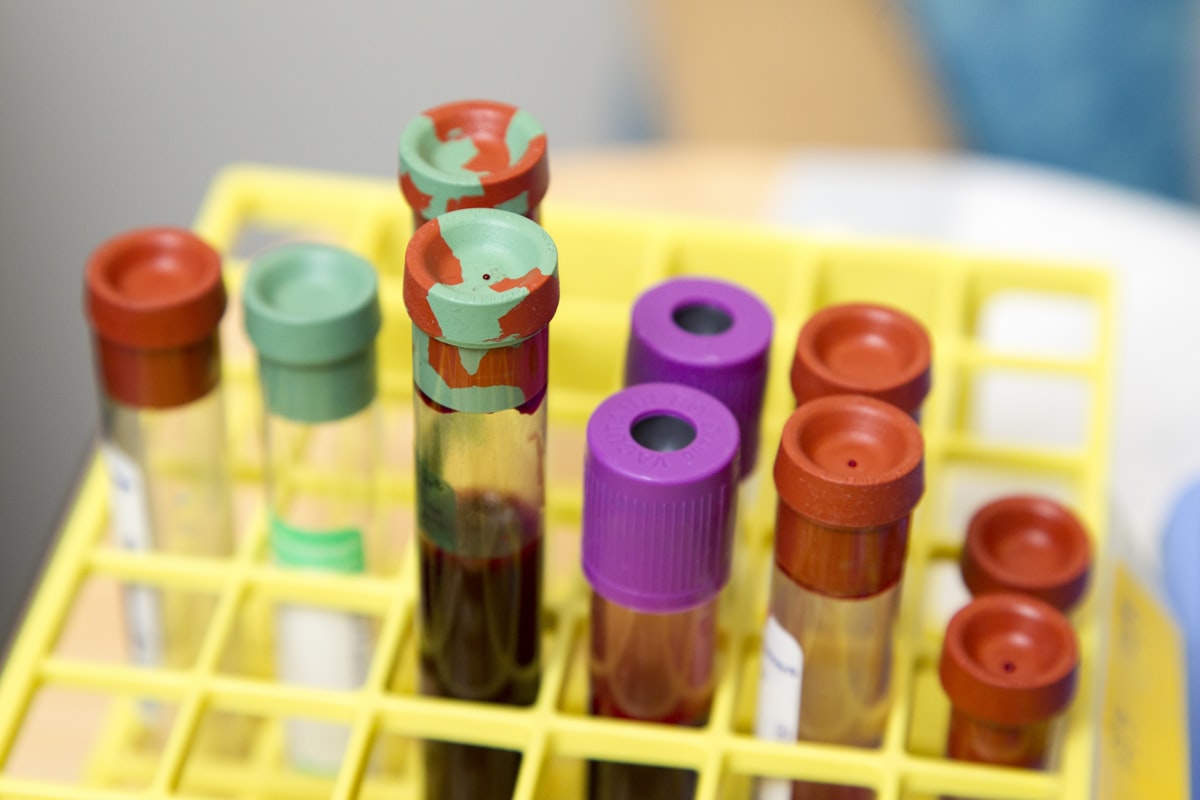

The peptide molecule is rarely the expensive part. Labs, the prescriber model, and which pharmacy compounds the vial drive most of the difference between a $99 and a $400 monthly bill.
Physician-prescribed peptide therapy runs roughly $99 to $400 per month through telehealth, before labs. The peptide itself is rarely what moves that number. What drives it is the compounding pharmacy, whether baseline and follow-up labs are bundled, which peptide or stack you are on, and the prescriber model behind the platform. These are the same variables that shape any peptide therapy program, not just its price.
- Compounded GH-axis peptide therapy costs roughly $99 to $400 per month through telehealth, before labs
- Baseline and 90-day IGF-1 labs add about $50 to $150 each and are non-optional in a legitimate program
- A sermorelin plus ipamorelin stack costs more than sermorelin alone; CJC-1295 protocols sit at the top of the range
- Tesamorelin, the one FDA-approved GHRH analog, is a branded drug and costs far more than any compounded peptide
- Programs that reveal price only after a consultation call are a consistent red flag
The one number that matters is the all-in monthly cost, not the sticker price on the vial. A $99 program that adds separate lab fees and a consultation charge can land higher than a $179 program that includes both.
What Peptide Therapy Costs Through Telehealth
Compounded peptides are priced by the pharmacy and marked up by the platform, so ranges are wide. The figures below reflect published telehealth pricing for the common GH-axis protocols. Tesamorelin sits in a different category because it is an FDA-approved brand rather than a compounded preparation [3].
| Component | Typical monthly range |
|---|---|
| Sermorelin (compounded, monotherapy) | $79 to $329 |
| Sermorelin + ipamorelin blend | $99 to $399 |
| CJC-1295 or CJC-1295 + ipamorelin | $150 to $400 |
| Baseline IGF-1 lab (one-time) | $50 to $150 |
| Follow-up IGF-1 at 90 days | $50 to $150 |
| Tesamorelin (FDA-approved brand) | Often $1,000+ |
Add the monthly peptide cost, the amortized lab cost, and any consultation or membership fee before comparing two programs. The lowest headline price is frequently not the lowest total.
What Drives the Price
Four variables explain almost all of the spread between programs. None of them is the amino acid sequence itself.
The compounding pharmacy
Peptide therapy has no FDA-approved product outside tesamorelin, so every sermorelin or ipamorelin prescription is compounded, and the FDA does not verify compounded drugs for safety, effectiveness, or quality before marketing [1]. A 503B outsourcing facility operates under current good manufacturing practice requirements; a 503A pharmacy does not [1]. The higher standard tends to cost more, and it is worth paying for.
Whether labs are bundled
A baseline IGF-1 before prescribing and a retest at 90 days are the clinical backbone of the therapy, not upsells [2]. Some programs include them in the monthly price; others bill them separately or send you to a third-party lab. A bundled program looks pricier per month and is often cheaper in total.
The peptide or stack
Sermorelin monotherapy is the least expensive route. Adding ipamorelin raises the cost, and CJC-1295 protocols sit at the top of the compounded range because the molecule is more expensive to produce. More peptides in the vial means a higher price, not automatically a better result.
The prescriber model
A platform with real physician evaluation, dose titration, and follow-up costs more to run than one that ships a fixed dose after an intake form. The cheaper model often skips the lab work that makes the therapy measurable, which is exactly the corner you do not want cut.
The Labs You Should Budget For
Plan for lab work as part of the cost, not an optional extra. At minimum that means a baseline IGF-1 before the first dose and a retest at 90 days to confirm the dose is working [2]. Many prescribers add a broader panel at intake covering thyroid and metabolic markers, since untreated hypothyroidism blunts the GH response.
- Baseline IGF-1 before prescribing: about $50 to $150
- 90-day follow-up IGF-1: about $50 to $150
- Optional intake panel (thyroid, metabolic, CBC): varies by provider
- A program that prescribes with no labs at all is cheaper for a reason, and the reason is a quality gap
Red Flags in Peptide Pricing
Cost transparency correlates with clinical quality more than any badge on a homepage. A few patterns show up repeatedly in low-quality programs, and several overlap with the sourcing red flags in where to buy peptides safely.
- Pricing disclosed only after a mandatory consultation call
- No baseline IGF-1 offered or required before shipping product
- Prices far below the compounded range, which often signals gray-market product sold as "research use only" rather than a prescribed compounded drug
- Long prepaid commitments before you have seen a 90-day lab response
- No mention of whether the pharmacy is 503A or 503B
SystemLabs includes baseline IGF-1 testing before prescribing and adjusts dosing off the results, so the price reflects a measurable protocol rather than a flat monthly vial. Starting at $179 per month.
Bottom Line
Frequently Asked Questions
How much does peptide therapy cost per month?
Compounded GH-axis peptide therapy runs roughly $99 to $400 per month through telehealth, before labs. Sermorelin monotherapy is the least expensive, a sermorelin plus ipamorelin stack costs more, and CJC-1295 protocols sit at the top of the range. Add about $50 to $150 for each IGF-1 lab draw to reach the all-in number.
Why is peptide therapy so expensive?
The cost is driven by the compounding pharmacy, bundled lab work, the specific peptide or stack, and the prescriber model, not by the amino acid sequence. A 503B outsourcing facility that operates under current good manufacturing practice standards costs more than a 503A pharmacy that does not [1], and programs that include baseline and follow-up IGF-1 labs carry that cost in the monthly price.
Does peptide therapy cost include lab work?
Sometimes, and that is the number to check. A legitimate program requires a baseline IGF-1 before prescribing and a retest at 90 days [2], each running about $50 to $150. Some platforms bundle those into the monthly fee while others bill them separately, so a lower headline price can end up higher once labs are added.
Is compounded peptide therapy cheaper than the FDA-approved version?
Yes, substantially. Compounded sermorelin and ipamorelin cost in the low hundreds per month, while tesamorelin, the one FDA-approved GHRH analog, is a branded drug that often exceeds $1,000 per month [3]. The tradeoff is that compounded products are not FDA-verified for quality before marketing [1], so the pharmacy standard matters.
What is a fair price for sermorelin therapy?
Compounded sermorelin generally runs $79 to $329 per month depending on dose and whether labs are included. A price far below that range is a warning sign, often indicating gray-market product sold as "research use only" rather than a prescribed compounded drug from a licensed pharmacy. Cost transparency and included IGF-1 testing matter more than the lowest number.
Why do some programs hide their pricing?
Programs that disclose price only after a mandatory consultation call are a consistent red flag. Transparent pricing tends to track with clinical quality, including whether baseline IGF-1 testing is required before prescribing. If a platform will not show a monthly cost and a lab policy up front, treat that as information about the program.
References
- Compounding and the FDA: questions and answers FDA.gov, Human Drug Compounding, 2025. Content current as of 09/16/2025. https://www.fda.gov/drugs/human-drug-compounding/compounding-and-fda-questions-and-answers
- Sermorelin: a better approach to management of adult-onset growth hormone insufficiency? Clinical Interventions in Aging, 2006. PMC2699646. https://pmc.ncbi.nlm.nih.gov/articles/PMC2699646/
- EGRIFTA SV (tesamorelin) for injection: full prescribing information DailyMed, U.S. National Library of Medicine, 2025. FDA-approved labeling. https://dailymed.nlm.nih.gov/dailymed/drugInfo.cfm?setid=3d783378-b02d-4f19-99dd-0fc91a042224