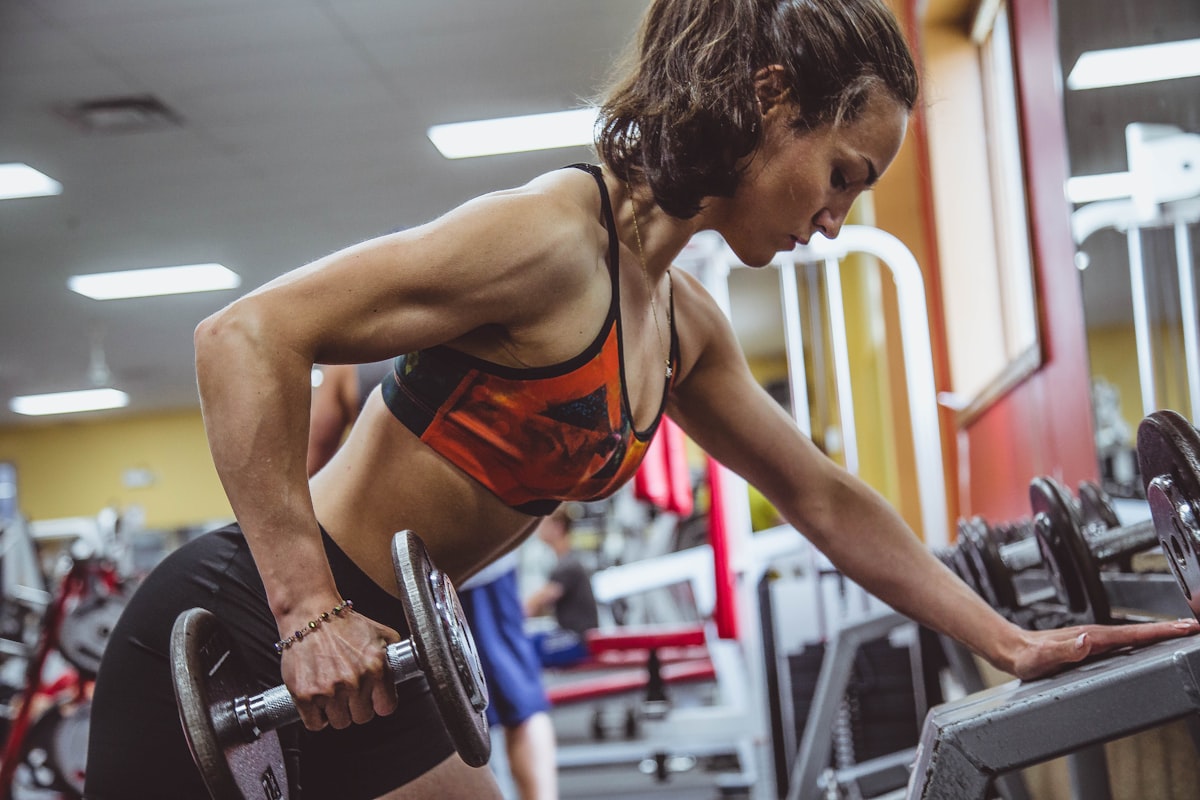

A systematic review of growth hormone in athletes found lean body mass rose by about 2.1 kg, but strength and exercise capacity did not improve. Gaining lean mass and gaining usable strength are not the same outcome, and that gap is the central issue with using GH axis therapy to build muscle.
No published clinical trial has tested sermorelin for muscle growth, bodybuilding, or athletic performance in healthy young adults. What exists instead is adjacent evidence: a controlled trial of a close GHRH(1-29) analog in older adults, and a systematic review of growth hormone itself in athletes. Read together, they support a narrower claim than most peptide marketing makes.
- No controlled trial has tested sermorelin for muscle growth in healthy young adults
- GH raised lean body mass by about 2.1 kg in athletes but did not improve strength or exercise capacity [2]
- The closest GHRH(1-29) evidence found increased lean mass in older men only, not in women [3]
- IGF-1 is the main mediator of GH effects on muscle, which is why it is the marker worth tracking [4]
- Sermorelin is banned at all times in tested sport [1]
Sermorelin is named explicitly on the WADA 2026 Prohibited List under S2.2.4, growth hormone releasing factors [1]. It is prohibited at all times, both in and out of competition, as a non-specified substance. IGF-1 is separately prohibited under S2.3. If you are subject to anti-doping testing, this is disqualifying.
Lean Mass and Strength Are Different Outcomes
This is the point that decides the question. A systematic review of growth hormone and athletic performance found that lean body mass increased in growth hormone recipients by 2.1 kg compared with those who did not receive it, but strength and exercise capacity did not seem to improve [2]. The authors concluded that claims growth hormone enhances physical performance are not supported by the scientific literature [2], and noted it may worsen exercise capacity and increase adverse events.
A scale reading or a DEXA lean-mass number can move without any change in what you can lift. That distinction matters because most marketing for GH axis peptides quotes lean mass gains and lets the reader infer strength. The review that looked directly at performance did not find it.
Liu and colleagues studied growth hormone itself, not sermorelin. Sermorelin acts upstream by stimulating the pituitary rather than delivering GH directly, and it produces smaller, pulsatile increases. The finding is the best available guide to what elevated GH does for performance, not a direct test of sermorelin.
The detail in "Lean Mass and Strength Are Different Outcomes" only matters clinically once a prescriber applies it to your labs. SystemLabs is the provider we found doing that, at $179 a month, checking baseline IGF-1 levels before it prescribes, then formulates dose on clinical indication.
What the GHRH Data Actually Shows
The closest evidence to sermorelin comes from a randomized placebo-controlled study of [[Nle27]GHRH(1-29)NH2, a norleucine-substituted analog of the same fragment sermorelin is built on, at 10 mcg/kg subcutaneously each night for 16 weeks](https://pubmed.ncbi.nlm.nih.gov/9141536/) [3]. In adults aged 55 to 71, it produced increases in lean body mass, insulin sensitivity, general well-being, and libido in men but not in women.
| Question | What the evidence supports |
|---|---|
| Does it increase lean mass? | In older men, yes, over 16 weeks [3]. Not demonstrated in older women |
| Does it increase strength? | Not established. The GH performance review found no strength benefit [2] |
| Has it been tested in young lifters? | No published trial exists |
| Does it reduce fat while building muscle? | Fat mass did not change significantly over 16 weeks [3] |
| Is it detectable in drug testing? | Yes, and it is prohibited at all times [1] |
The population matters here. These were adults in their late fifties to early seventies with age-related decline in GH axis function. Restoring a declining axis toward normal is a different proposition from pushing an already-normal axis higher, and results in the first group do not transfer to the second.
Why IGF-1 Is the Marker That Matters
Sermorelin does not act on muscle directly. It stimulates pituitary GH release, and GH promotes muscle development mainly through IGF-1 [4], which drives protein synthesis through the PI3K/Akt/mTOR pathway and suppresses protein degradation by inhibiting FoxO-driven ubiquitin ligases. That is the anabolic route, and it is why a baseline and 90-day IGF-1 tells you more about whether the protocol is doing anything than any measurement you take in a mirror.
It also sets a ceiling. Sermorelin restores signaling within a system regulated by somatostatin feedback, so it cannot drive IGF-1 to the supraphysiologic levels associated with exogenous HGH abuse. That self-limiting property is a safety advantage and a performance limitation at the same time.
Who This Actually Suits
Framed honestly, sermorelin is a poor fit for the goal most people searching this topic have, and a reasonable fit for a narrower one.
- Reasonable: adults over 40 with documented low or low-normal IGF-1, training consistently, wanting to preserve lean mass and improve recovery
- Reasonable: patients whose main complaint is poor sleep and slow recovery rather than a strength plateau
- Poor fit: healthy young lifters with a normal GH axis expecting a measurable strength increase
- Poor fit: anyone competing in tested sport, where it is prohibited at all times [1]
- Poor fit: anyone seeking rapid visible change. Fat mass did not shift significantly in 16 weeks of trial dosing [3]
If You Proceed Anyway
The variables that determine whether a protocol produces anything are unglamorous and mostly not about the dose.
- Draw a baseline IGF-1 before the first dose so the 90-day retest means something
- Inject at bedtime on an empty stomach, since most GH release occurs during slow-wave sleep and glucose blunts the pulse
- Keep resistance training and protein intake in place. Sermorelin does not build tissue without a stimulus
- Judge at 6 months, not at 6 weeks
- Expect recovery and sleep changes before any change in what you can lift, and be prepared for the second not to arrive
GH-axis peptides move body composition slowly and only when the protocol is measured. SystemLabs tests IGF-1 before prescribing and formulates sermorelin on clinical indication, so a muscle or recomposition goal is tracked against your labs rather than a promise on a product page.
Frequently Asked Questions
Does sermorelin build muscle?
No controlled trial has tested sermorelin for muscle growth in healthy young adults. The closest evidence used a norleucine-substituted GHRH(1-29) analog in adults aged 55 to 71 and found increased lean body mass in men but not women over 16 weeks [3]. Separately, a systematic review of growth hormone in athletes found lean mass rose about 2.1 kg without improvement in strength or exercise capacity [2]. The honest summary is that lean mass may increase in people with a declining GH axis, and that this has not been shown to translate into strength.
Is sermorelin better than steroids for muscle growth?
They work through unrelated mechanisms and are not substitutes. Anabolic-androgenic steroids act on androgen receptors and have well-documented effects on strength and muscle mass. Sermorelin stimulates pituitary GH release, and the performance evidence for elevated GH does not show a strength benefit [2]. Sermorelin has a much milder side effect profile, but expecting steroid-comparable muscle gains from it is not supported by any published data.
What sermorelin dosage is used for muscle growth?
There is no established dose for this purpose, because no trial has studied it. The nearest published adult figure is 10 mcg/kg nightly from the GHRH(1-29) analog study [3], and telehealth practice commonly starts at 100 to 300 mcg nightly. Any dose targeting muscle growth specifically is extrapolation. Higher doses do not bypass somatostatin feedback, which limits how far the axis can be pushed.
Is sermorelin banned in sports?
Yes. Sermorelin is named explicitly on the WADA 2026 Prohibited List under section S2.2.4, growth hormone releasing factors, and is prohibited at all times, both in and out of competition, as a non-specified substance [1]. IGF-1 is separately prohibited under S2.3. Athletes subject to anti-doping testing should not use it.
How long does it take to see muscle gains from sermorelin?
If it happens at all, on a 6-month timescale rather than weeks. The 16-week analog trial showed lean body mass gains in older men by the end of that window [3], and fat mass had not changed significantly. Recovery and sleep quality typically change first, within the first month. Anyone expecting visible muscle change in 4 to 8 weeks is working from a timeline no published data supports.
Can sermorelin help with muscle loss from aging?
This is the strongest version of the case, though the evidence is still limited. The GH axis declines with age, and the analog trial in adults aged 55 to 71 found increased lean body mass and insulin sensitivity in men [3]. Preserving lean mass in someone with documented low or low-normal IGF-1 is a more defensible goal than adding muscle to a young athlete with a normal axis, and it should still be paired with resistance training and adequate protein.
References
- The 2026 Prohibited List: International Standard, section S2.2.4 growth hormone releasing factors World Anti-Doping Agency, 2026. WADA 2026 Prohibited List. https://www.wada-ama.org/en/resources/2026-prohibited-list
- Systematic review: the effects of growth hormone on athletic performance Annals of Internal Medicine, 2008. PMID: 18347346. https://pubmed.ncbi.nlm.nih.gov/18347346/
- Endocrine and metabolic effects of long-term administration of [Nle27]growth hormone-releasing hormone-(1-29)-NH2 in age-advanced men and women Journal of Clinical Endocrinology & Metabolism, 1997. PMID: 9141536. https://pubmed.ncbi.nlm.nih.gov/9141536/
- Mechanisms of IGF-1-mediated regulation of skeletal muscle hypertrophy and atrophy Cells, 2020. PMID: 32858949. https://pubmed.ncbi.nlm.nih.gov/32858949/