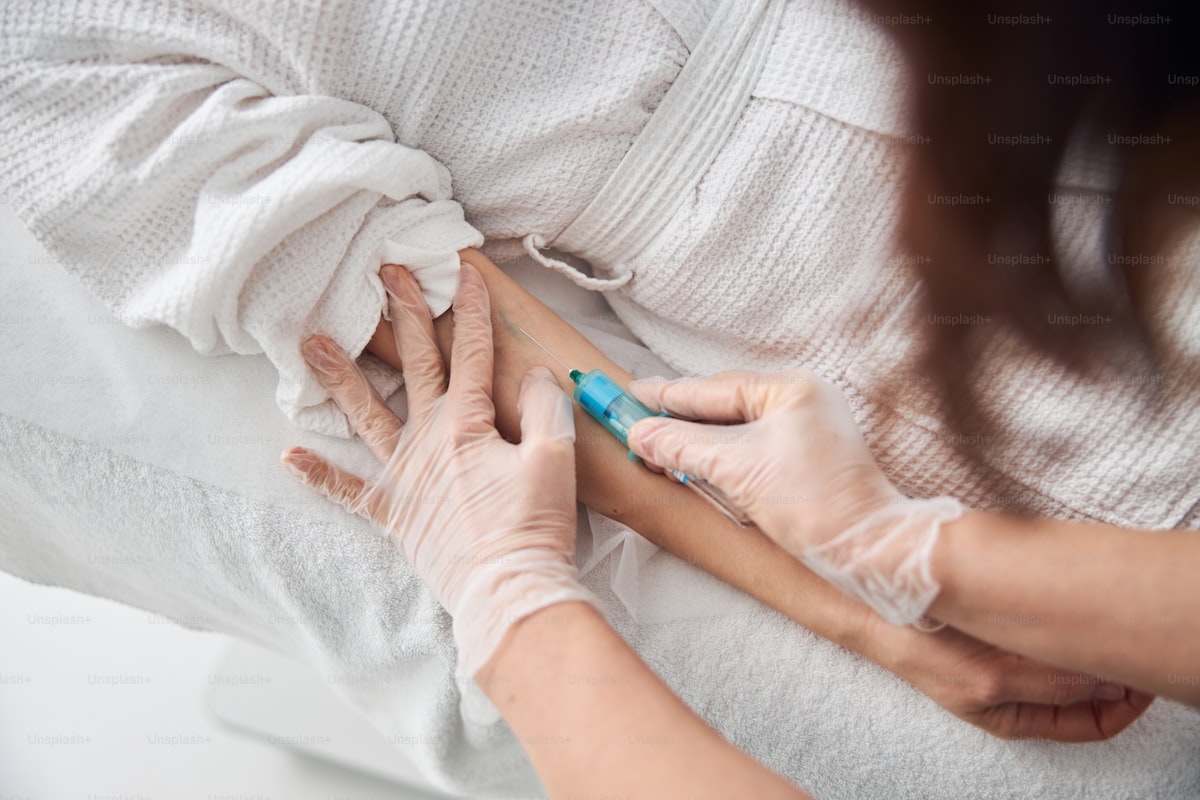

Every published clinical trial of sermorelin used an injected route. A PubMed search for oral, sublingual, buccal, troche, or lozenge sermorelin trials measuring IGF-1 returns no results, which means tablet and troche formulations are sold without trial evidence that they raise IGF-1 in humans.
Oral sermorelin is sold as tablets, capsules, sublingual troches, and lozenges by several telehealth platforms. The clinical case for them is weaker than the marketing implies. Sermorelin's published evidence base is built entirely on injected administration [1], and no published clinical trial has demonstrated that an oral or sublingual sermorelin formulation raises IGF-1 or growth hormone in humans. That absence, rather than any argument about absorption physics, is the central fact a patient should weigh.
- All published sermorelin trials used subcutaneous or intravenous administration [1][2]
- No published clinical trial shows oral or sublingual sermorelin raising IGF-1 in humans
- Unmodified peptides taken orally show bioavailability under 1%, sometimes under 0.1% [3]
- Sublingual delivery does bypass hepatic first-pass metabolism, which is a real mechanism [4]
- If you use an oral form, a 90-day IGF-1 retest is the only way to know whether it did anything
Why the Route of Administration Matters for Peptides
Sermorelin is a 29-amino-acid peptide, not a small molecule. Swallowed peptides face two obstacles before reaching circulation. Gastric acid at pH 1.0 to 2.0 causes denaturation and unfolding, and intestinal proteases digest the remaining chain. What survives then passes through the liver, where first-pass metabolism removes more. The result across unmodified peptide drugs is oral bioavailability under 1%, and in some cases under 0.1% [3].
For scale, the oral peptide products that did reach approval required substantial formulation engineering to get there, and even then land near 1% for oral semaglutide and roughly 0.7% for oral octreotide [3]. Those figures come from products built specifically to survive the gut. A compounded sermorelin tablet is not that.
Low peptide bioavailability is a general finding, not a measurement of sermorelin specifically. The accurate statement is that the literature is silent on oral sermorelin, not that it has been tested and failed. Silence is still a poor basis for a 6-month protocol.
Sublingual and Troche Forms Are a Different Argument
Sublingual and buccal routes deserve a fairer hearing than swallowed tablets. Drug absorbed through the oral mucosa enters systemic circulation directly and bypasses hepatic first-pass metabolism [4]. The mucosa is well vascularized, and that mechanism is genuine.
The limitation is that peptides in general are poorly absorbed across mucosal membranes because of molecular size, hydrophilicity, and low membrane permeability [5]. Overcoming that typically requires permeation enhancers or specialized delivery systems rather than a compounded troche. No published trial establishes what fraction of a sublingual sermorelin dose reaches circulation intact, or what dose would be equivalent to a standard subcutaneous protocol.
Injection Versus Oral Forms, Compared
| Factor | Subcutaneous injection | Oral tablet or capsule | Sublingual troche |
|---|---|---|---|
| Published trial evidence in humans | Yes [1][2] | None found | None found |
| Bypasses gastric acid and proteases | Yes | No | Yes, if held sublingually |
| Bypasses hepatic first-pass | Yes | No | Yes [4] |
| Known dose equivalence to trial protocols | Yes, 10 mcg/kg nightly studied [2] | Not established | Not established |
| Adherence for injection-averse patients | Lower | Higher | Higher |
| Verifiable by 90-day IGF-1 | Yes | Yes | Yes |
What Dose and Route the Trials Actually Used
The adult data most often cited for sermorelin used [[Nle27]GHRH(1-29)NH2, a close analog of the same fragment, at 10 mcg/kg subcutaneously each night for 16 weeks](https://pubmed.ncbi.nlm.nih.gov/9141536/) [2], producing IGF-1 elevation within 2 weeks. The pediatric labeling for the formerly approved product specified 30 mcg/kg subcutaneously once daily at bedtime, with 1 mcg/kg intravenously for diagnostic testing [1]. Neither an oral nor a sublingual route appears anywhere in that evidence base.
How to Decide Between Them
The honest tradeoff is adherence against evidence. A patient who will not inject nightly and therefore takes nothing gets no benefit at all, and for that patient a non-injectable form that is actually used may be the better practical choice. A patient who is willing to inject has no clinical reason to choose a formulation with no trial support.
- Choose injection if you are willing to self-administer. It is the only route with published human outcome data
- Consider a sublingual form only if injection is a genuine barrier to starting treatment at all
- Avoid swallowed tablets and capsules in favor of sublingual forms if you go non-injectable, since swallowing adds the gastric and first-pass losses back
- Whatever route you choose, draw a baseline IGF-1 and retest at 90 days. That is the only way to know it worked
Ask any platform selling oral or sublingual sermorelin what dose they consider equivalent to a standard subcutaneous protocol, and what evidence supports that equivalence. A provider who cannot answer is pricing a formulation whose delivered dose is unknown.
Subcutaneous sermorelin is the form with the pharmacology behind it, and it is what legitimate telehealth prescribes. Embody is our top-ranked provider for injectable sermorelin at $99/month with no insurance or bloodwork required.
Frequently Asked Questions
Does oral sermorelin work?
No published clinical trial has demonstrated that oral or sublingual sermorelin raises IGF-1 or growth hormone in humans. The entire published evidence base for sermorelin uses injected administration [1][2]. That does not prove oral forms fail, since the literature is silent rather than negative, but it does mean patients using them are relying on a formulation whose delivered dose has not been established.
What is the bioavailability of oral sermorelin?
It has not been published for sermorelin specifically. As a general class finding, unmodified peptides taken orally show bioavailability under 1% and sometimes under 0.1%, because gastric acid denatures them, intestinal proteases digest them, and hepatic first-pass metabolism removes more [3]. Approved oral peptides that required extensive formulation work still land around 1% for semaglutide and 0.7% for octreotide [3].
Are sermorelin troches better than tablets?
Mechanistically, yes, if held under the tongue rather than swallowed. Sublingual and buccal absorption enters systemic circulation directly and bypasses hepatic first-pass metabolism [4]. The unresolved issue is how much of a peptide the size of sermorelin crosses the mucosa, since peptides are generally poorly absorbed there due to size, hydrophilicity, and low membrane permeability [5]. No trial quantifies this for sermorelin.
Why do so many providers sell sermorelin tablets if there is no evidence?
Because injection aversion is a real barrier to starting and continuing therapy, and a non-injectable option is easier to sell and easier to adhere to. That is a commercial and adherence rationale, not a clinical one. It is a legitimate reason to offer the format and not a substitute for evidence that the format delivers a therapeutic dose.
How do I know if my oral sermorelin is doing anything?
Draw a baseline IGF-1 before your first dose and retest at 90 days, which is when the response approaches its peak. If IGF-1 has not moved from baseline, the formulation is not delivering a meaningful dose regardless of what the label says. This is the single most useful test for any sermorelin protocol and it matters more for non-injectable forms, where delivered dose is unverified.
Is injectable sermorelin more expensive than tablets?
Not consistently. Pricing across telehealth platforms is driven more by the program structure, whether labs and clinician access are bundled, and plan length than by the delivery form. Some platforms price oral and sublingual forms higher than their own injectable, and an intranasal option is typically the most expensive of the three.
References
- Sermorelin: a review of its use in the diagnosis and treatment of children with idiopathic growth hormone deficiency BioDrugs, 1999. PMID: 18031173. https://pubmed.ncbi.nlm.nih.gov/18031173/
- Endocrine and metabolic effects of long-term administration of [Nle27]growth hormone-releasing hormone-(1-29)-NH2 in age-advanced men and women Journal of Clinical Endocrinology & Metabolism, 1997. PMID: 9141536. https://pubmed.ncbi.nlm.nih.gov/9141536/
- Barriers and strategies for oral peptide and protein therapeutics delivery: update on clinical advances Pharmaceutics, 2025. PMID: 40284395. https://pubmed.ncbi.nlm.nih.gov/40284395/
- Advances in nanoparticulate drug delivery approaches for sublingual and buccal administration Frontiers in Pharmacology, 2019. PMID: 31827435. https://pubmed.ncbi.nlm.nih.gov/31827435/
- Factors and strategies for improving buccal absorption of peptides European Journal of Pharmaceutics and Biopharmaceutics, 2001. PMID: 11226816. https://pubmed.ncbi.nlm.nih.gov/11226816/