Roughly 70 percent of daily growth hormone release occurs during the first slow-wave sleep episode, 60 to 90 minutes after sleep onset. Sermorelin amplifies the pituitary GH pulse at that window. Bedtime injection is a clinical requirement, not a scheduling preference.
Sermorelin improves sleep by restoring the growth hormone pulse that depends on slow-wave sleep. The mechanism runs in both directions: the pituitary releases its largest daily GH bolus during deep sleep, and the GH released during that window reinforces deeper sleep in the next cycle. Sermorelin amplifies the GHRH signal at the start of that window, which increases GH pulse amplitude and, over weeks, restores more restorative sleep architecture.
- Roughly 70 percent of daily GH release occurs during the first slow-wave sleep episode, 60 to 90 minutes after sleep onset
- Sermorelin amplifies pituitary GH output at that window; bedtime injection is required to align with it
- The GH-SWS relationship is bidirectional: more GH release promotes deeper sleep, which promotes more GH in subsequent nights
- Sermorelin does not cause sedation; it restores sleep architecture through the GH pathway
- Sleep improvement is typically the first reported outcome, within 2 to 4 weeks of starting the protocol
Slow-Wave Sleep Is the Primary Window for GH Release
Takahashi, Kipnis, and Daughaday (1968) first documented that the dominant GH pulse of the day occurs during the first slow-wave sleep episode, within 60 to 90 minutes of sleep onset [1]. In healthy adults, this sleep-associated pulse accounts for roughly 70 percent of daily GH output. In older adults, both slow-wave sleep duration and the nocturnal GH pulse decline together, often in proportion to each other.
Slow-wave sleep, also called stage N3 or deep sleep, is the phase defined by high-amplitude delta waves on EEG. Tissue repair, immune consolidation, and the majority of GH secretion are concentrated in this phase. When slow-wave sleep shortens or fragments, as it does progressively with age, GH output falls with it. This is the mechanism connecting poor sleep quality with declining IGF-1 in middle-aged adults.
What Sermorelin Does to the Sleep-GH Cycle
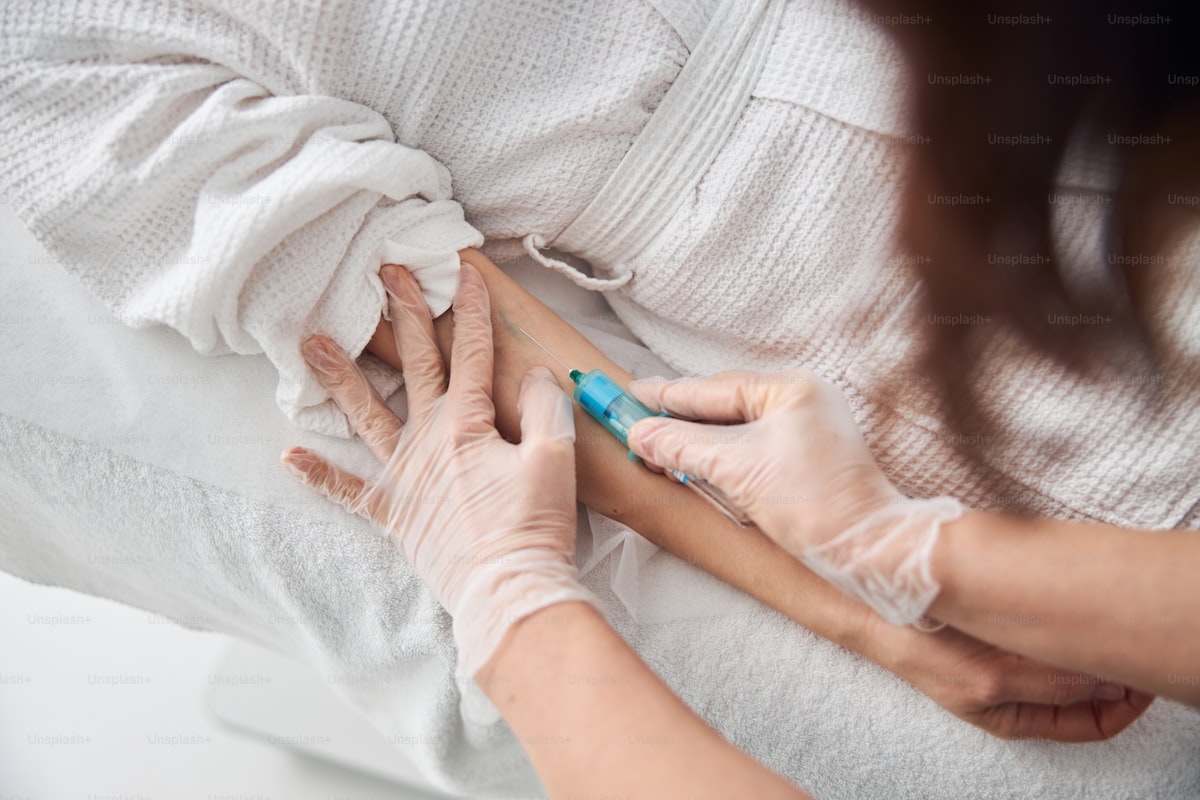
Sermorelin is a GHRH analog. Injected subcutaneously at bedtime, it peaks in plasma within 20 to 30 minutes and reaches the pituitary as the first slow-wave sleep episode begins. It binds to GHRH receptors on pituitary somatotroph cells and stimulates a larger GH pulse during that SWS window. Over repeated dosing, this elevated GH output restores the downstream IGF-1 signal and, through GH feedback on sleep architecture, gradually improves SWS depth and duration.
Why the Relationship Works Both Ways
Van Cauter, Plat, and Copinschi (1998) reviewed evidence that GHRH and GH both promote slow-wave sleep, and that selective SWS deprivation reduces nocturnal GH secretion [2]. The bidirectional loop means sleep improvement from sermorelin builds over weeks rather than appearing on the first night. Each night of improved GH output supports a deeper slow-wave episode the following night, which in turn allows a larger GH pulse. This is why patients who are consistent with the protocol report that sleep quality keeps improving over the first 4 to 8 weeks.
Spiegel, Leproult, and Van Cauter (1999) showed that restricting sleep to 4 hours per night for 6 days reduced the amplitude of the nocturnal GH pulse and shifted more GH secretion to daytime hours outside the SWS window [3]. This confirms that sleep architecture directly controls GH output, which is why sermorelin therapy produces the best results alongside consistent, adequate sleep rather than as a substitute for it.
What Sermorelin Does Not Do to Sleep
Sermorelin has no sedative or hypnotic properties. It does not work like melatonin, a benzodiazepine, or a Z-drug. It does not cause drowsiness after injection and does not accelerate sleep onset directly. Patients who inject sermorelin and expect to feel sleepy within 30 minutes will not. The improvement in sleep comes entirely through the GH pathway: more GH during SWS leads to deeper, more restorative sleep architecture over the following weeks.
Sermorelin restores sleep architecture through the GH-SWS cycle. It does not sedate. Patients who measure sleep quality over 4 to 8 weeks with a consistent bedtime protocol see the clearest results. Patients who expect an immediate sedative effect will be disappointed.
When Sleep Improvement Appears
Sleep improvement is typically the first reported outcome, usually within 2 to 4 weeks of a consistent protocol. The effect is incremental: each bedtime injection adds to a pattern of better GH pulsation during SWS, and the bidirectional cycle begins reinforcing itself over that period. Patients typically describe falling asleep more easily, fewer nighttime awakenings, and waking with a greater sense of restoration.
Deep, uninterrupted slow-wave sleep is not something most people consciously perceive, but its downstream effects on morning energy, mood, and cognitive sharpness are. These are the changes patients notice first and most consistently, often before any body composition effect is measurable.
Who Benefits Most From This Effect
Patients with documented GH axis decline, confirmed by low or low-normal IGF-1 on a baseline draw, show the strongest sleep response. Age-related decline in slow-wave sleep tracks closely with GH decline, which is why adults over 40 who report consistently lighter sleep, frequent awakenings, or feeling unrested after a full night are often the most responsive candidates.
Sermorelin does not correct sleep problems that originate outside the GH axis. Sleep apnea, elevated cortisol, thyroid dysfunction, and anxiety-driven insomnia will not respond to a GHRH analog. These should be ruled out or addressed alongside sermorelin when the clinical picture includes multiple contributing factors.
Bottom Line
Sermorelin improves sleep quality by amplifying the GH pulse that occurs during slow-wave sleep. Bedtime injection is not optional; it positions the compound to reach the pituitary at the start of the SWS window where most daily GH release occurs. Improvement builds over 2 to 4 weeks because the GH-SWS relationship is bidirectional. Patients who track sleep quality rather than expecting a sedative effect see the most consistent results.
The slow-wave sleep effect shows up when sermorelin is dosed at night and titrated against your labs. Embody is our top-ranked provider at $99/month with no insurance or bloodwork required, with licensed clinicians managing the protocol.
Frequently Asked Questions
How long does it take for sermorelin to improve sleep?
Sleep improvement is typically the first reported outcome, usually within 2 to 4 weeks of a consistent bedtime protocol. The effect is incremental: each injection adds to a pattern of better GH pulsation during slow-wave sleep, and the bidirectional GH-SWS cycle begins reinforcing itself over that period. A single-night effect is not expected.
Does sermorelin work like a sleep aid or sedative?
No. Sermorelin has no sedative or hypnotic properties and will not cause drowsiness after injection. The improvement in sleep comes entirely through the GH pathway: more GH output during slow-wave sleep leads to deeper, more restorative sleep architecture over weeks. The correct expectation is improved sleep quality over 2 to 4 weeks, not faster sleep onset on night one.
What does better sleep from sermorelin actually feel like?
Patients typically report falling asleep more easily, fewer nighttime awakenings, and waking with a greater sense of restoration. The underlying change is improved slow-wave sleep depth and duration, which most people cannot directly perceive but notice as improved morning energy, better mental clarity, and feeling genuinely rested after a full night. These are consistent with a restored GH pulse during the first slow-wave sleep episode of the night.
Why does sermorelin have to be injected at bedtime?
Bedtime injection is a clinical requirement, not a preference. Roughly 70 percent of daily GH release occurs during the first slow-wave sleep episode, 60 to 90 minutes after sleep onset. Sermorelin reaches the pituitary approximately 20 to 30 minutes after subcutaneous injection. Injecting at bedtime aligns the compound with this sleep-phase GH window. Morning injection misses this window and competes with postprandial insulin, significantly reducing clinical effectiveness.
Can sermorelin help if I have insomnia or sleep apnea?
Sermorelin is not a treatment for insomnia or sleep apnea. It improves sleep architecture through the GH axis specifically, which helps patients with GH decline but does not address sleep problems from other causes. Sleep apnea, elevated cortisol, thyroid dysfunction, and anxiety-driven insomnia will not respond to a GHRH analog. Sermorelin works best when a low or low-normal IGF-1 on a baseline draw confirms GH axis decline as a contributing factor to the sleep problem.
References
- Growth hormone secretion during sleep Journal of Clinical Investigation, 1968. PMID: 5675428. https://pubmed.ncbi.nlm.nih.gov/5675428/
- Interrelations between sleep and the somatotropic axis Sleep, 1998. PMID: 9779516. https://pubmed.ncbi.nlm.nih.gov/9779516/
- Impact of sleep debt on metabolic and endocrine function Lancet, 1999. PMID: 10543671. https://pubmed.ncbi.nlm.nih.gov/10543671/
- Sermorelin: a better approach to management of adult-onset growth hormone insufficiency? Clinical Interventions in Aging, 2006. PMC2682459. https://pmc.ncbi.nlm.nih.gov/articles/PMC2682459/