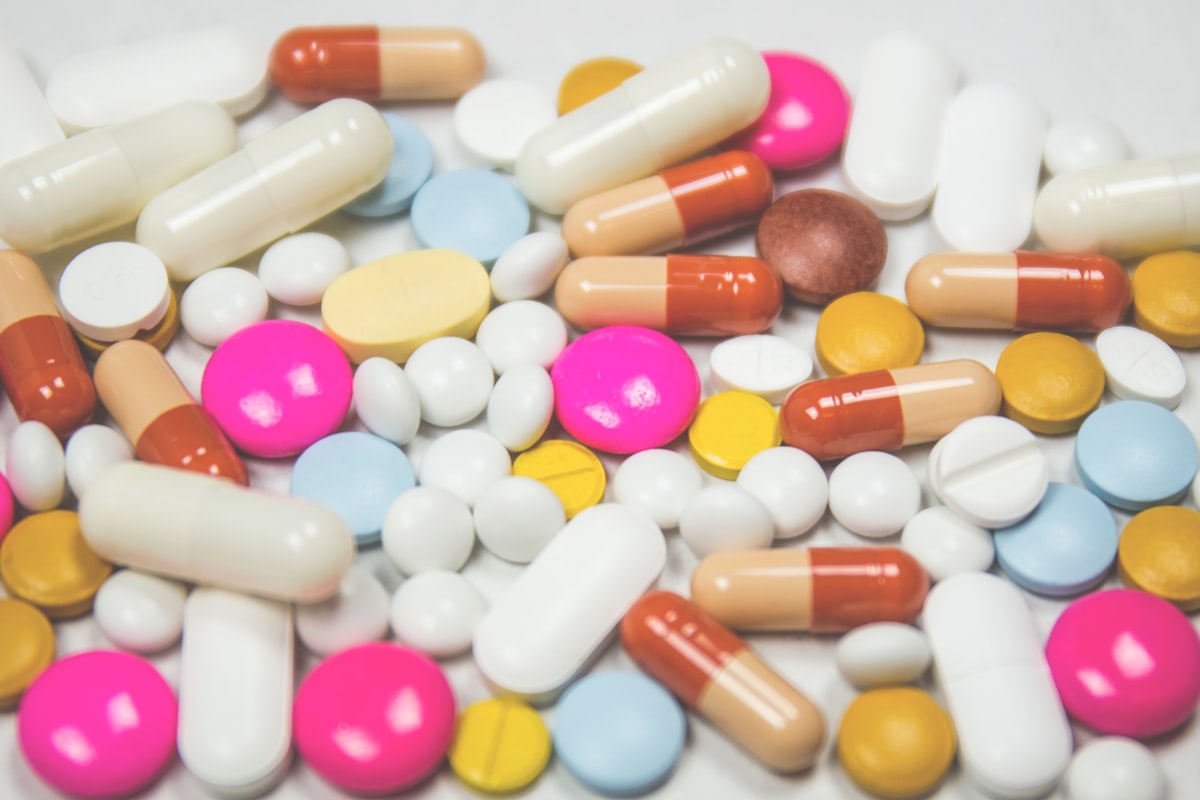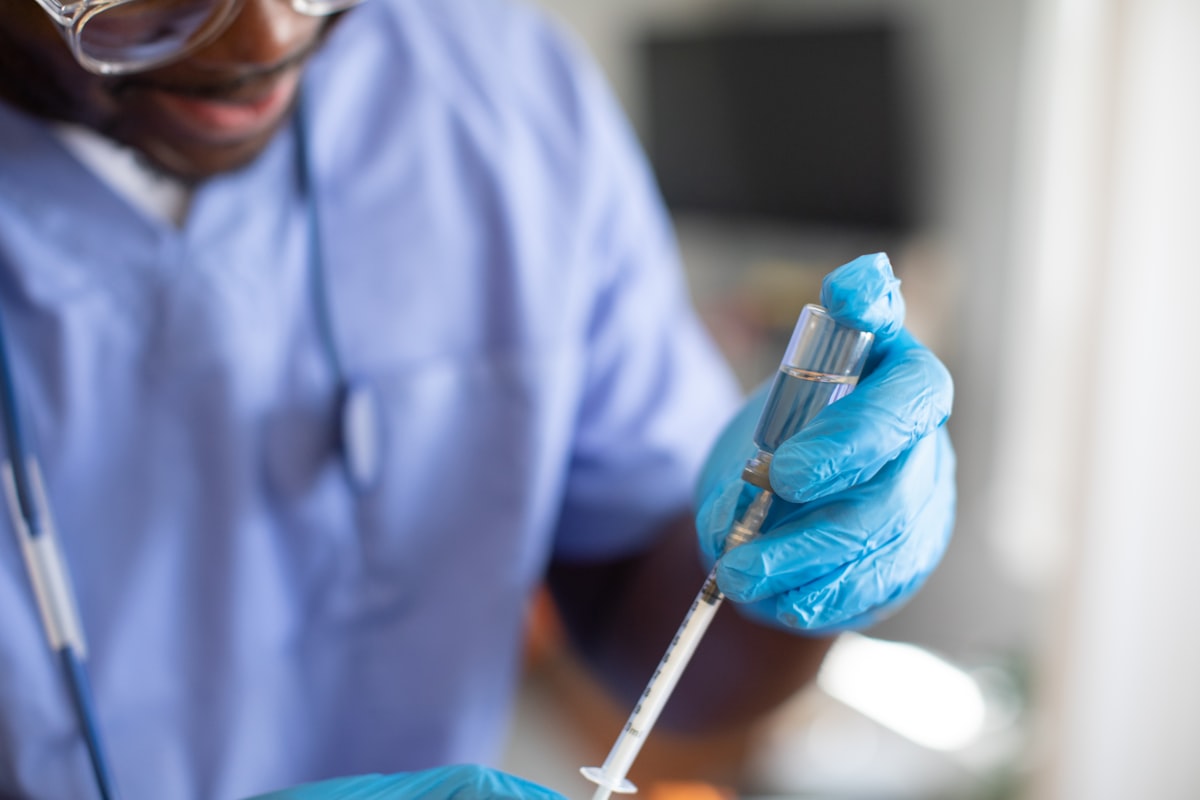

A standard drug test and an anti-doping test are looking for opposite things. The workplace panel screens for five classes of drugs of abuse and does not include peptide hormones. The anti-doping panel is built specifically to catch substances like sermorelin.
Standard drug tests do not detect sermorelin. The panels used for employment, probation, and most clinical screening are built to find drugs of abuse, not peptide hormones. Sermorelin is a GHRH analog and not a controlled substance, so it falls outside what those tests look for. The one setting where it does show up is anti-doping, where it is prohibited in sport at all times under the WADA Prohibited List [1].
- Standard 5-panel and 10-panel drug tests screen for drugs of abuse and do not include sermorelin
- Sermorelin is a peptide hormone and not a controlled substance, so it is outside the scope of workplace and clinical panels
- The peptide clears the bloodstream in minutes, so even a targeted assay has a narrow detection window [3]
- Anti-doping is the exception: GHRH analogs are prohibited at all times, in and out of competition [1]
- Not showing up on a drug test is not the same as FDA approval. Sermorelin is compounded, not FDA-approved [2]
What a Standard Drug Test Actually Screens For
A standard drug test looks for a fixed short list of drugs of abuse. The common 5-panel screens for five classes: amphetamines, cannabis (THC), cocaine metabolites, opiates, and phencyclidine. A 10-panel adds substances such as benzodiazepines, barbiturates, methadone, and others. None of these panels include growth hormone, IGF-1, or GHRH analogs.
The reason is design. These tests are immunoassays calibrated to specific small molecules of abuse. A peptide like sermorelin is a different class of compound entirely, and there is no reagent on a standard panel that reacts to it. Adding it would serve no purpose for the employer or clinician running the test.
- 5-panel urine test: amphetamines, THC, cocaine, opiates, phencyclidine. Sermorelin is not included
- 10-panel urine test: adds benzodiazepines, barbiturates, methadone, and others. Sermorelin is not included
- Alcohol and nicotine tests: unrelated to peptide hormones
- Sermorelin is not a controlled substance, so no standard legal or employment panel is built to detect it
Why Sermorelin Is Not on Those Panels
Two facts put sermorelin outside routine testing. First, it is a peptide hormone that works by stimulating the pituitary, not a drug of abuse with a legal control schedule [4]. Second, it does not linger. GHRH(1-29) analogs are cleared from the bloodstream with a half-life measured in minutes [3]. The parent compound is gone quickly, which is one reason detection requires a test built specifically to look for it rather than a general screen.
What sermorelin does raise is IGF-1, the downstream marker. IGF-1 is a normal blood hormone that everyone produces, and it is not part of any drug-of-abuse panel. A physician monitoring your protocol may measure IGF-1 on purpose, but a workplace or legal drug screen does not.
The Anti-Doping Exception
Competitive athletes are the group for whom sermorelin does show up, because anti-doping testing is built to find exactly this class of substance. The World Anti-Doping Agency lists growth hormone-releasing factors, their analogs, and GH secretagogues as prohibited at all times [1]. That category covers sermorelin, tesamorelin, CJC-1295, and the ipamorelin-type secretagogues.
For substances in this category, the WADA rule applies both in competition and out of competition [1]. There is no off-season window. Any athlete under a WADA-code testing program should treat sermorelin as prohibited and clear it with their governing body before use.
WADA-accredited laboratories use specialized methods to detect GH-axis manipulation, including approaches aimed at the downstream markers rather than the short-lived peptide itself. The practical takeaway is simple. If you compete under an anti-doping code, sermorelin is off the table regardless of how it is prescribed.
Is Sermorelin a Controlled Substance?
No. Sermorelin is not scheduled under the Controlled Substances Act, which is why it does not appear on legal or employment panels. That legal status is separate from its regulatory status. There is no FDA-approved sermorelin product on the market; every prescription is compounded, and compounded drugs are not FDA-approved [2].
Not showing up on a drug test is therefore not a stamp of approval. It reflects that sermorelin is a prescription peptide outside the drug-of-abuse categories, not that a regulator has cleared it the way it clears an approved medication.
Bottom Line
For almost everyone, sermorelin does not show up on a drug test. Standard employment and clinical panels screen for drugs of abuse and do not include peptide hormones, and sermorelin clears the blood in minutes [3]. The exception is anti-doping, where GHRH analogs are prohibited at all times [1]. If you compete under a WADA code, that is the rule that governs. If you do not, a routine drug screen has no reagent that reacts to sermorelin.
The safe version of this is a physician-supervised protocol with real labs, not a research-only vial from an unverified source. SystemLabs prescribes compounded sermorelin with baseline IGF-1 testing, so the therapy is documented and monitored.
Frequently Asked Questions
Does sermorelin show up on a standard drug test?
No. Standard 5-panel and 10-panel drug tests screen for drugs of abuse such as amphetamines, THC, cocaine, opiates, and benzodiazepines. Sermorelin is a peptide hormone and not a controlled substance, so it is outside what those panels detect. There is no reagent on a routine employment or clinical panel that reacts to sermorelin.
Will sermorelin fail a workplace drug test?
No. Workplace drug tests are built to find drugs of abuse, and sermorelin is not one of them. It is not scheduled under the Controlled Substances Act, and it clears the bloodstream in minutes [3]. A standard workplace panel has nothing calibrated to detect it, so a legitimate prescription will not cause a failed screen.
Can sermorelin be detected in an anti-doping test?
Yes. Anti-doping testing is the exception. The World Anti-Doping Agency lists growth hormone-releasing factors and their analogs as prohibited at all times, in and out of competition [1]. WADA-accredited labs use specialized methods aimed at GH-axis manipulation. Any athlete under a WADA code should treat sermorelin as prohibited.
Is sermorelin a controlled substance?
No. Sermorelin is not scheduled under the Controlled Substances Act, which is why standard legal and employment panels do not test for it. Its regulatory status is separate: there is no FDA-approved sermorelin product, and every prescription is compounded [2]. Not being controlled is not the same as being FDA-approved.
How long does sermorelin stay in your system?
The peptide itself clears quickly. GHRH(1-29) analogs have a half-life measured in minutes and are removed from the bloodstream rapidly [3]. The downstream effect on IGF-1 lasts longer, but IGF-1 is a normal hormone everyone produces and is not part of any drug-of-abuse panel.
Does sermorelin show up as HGH on a test?
Not on a standard drug test, which does not screen for HGH or sermorelin at all. Sermorelin also is not HGH; it stimulates the pituitary to release its own growth hormone rather than delivering GH directly [4]. In anti-doping testing, both GH itself and GHRH analogs like sermorelin fall under the same prohibited category [1].
References
- The 2026 Prohibited List, International Standard (S2: Peptide Hormones, Growth Factors, Related Substances and Mimetics) World Anti-Doping Agency, 2026. Effective 1 January 2026. https://www.wada-ama.org/en/prohibited-list
- Bulk Drug Substances Nominated for Use in Compounding Under Section 503A of the FD&C Act FDA.gov, Human Drug Compounding, 2025. Section 503A bulk substances. https://www.fda.gov/drugs/human-drug-compounding/bulk-drug-substances-nominated-use-compounding-under-section-503a-fdca
- Incorporation of D-Ala2 in growth hormone-releasing hormone-(1-29)-NH2 increases the half-life and decreases metabolic clearance in normal men Journal of Clinical Endocrinology & Metabolism, 1994. PMID: 7962295. https://pubmed.ncbi.nlm.nih.gov/7962295/
- Sermorelin: a better approach to management of adult-onset growth hormone insufficiency? Clinical Interventions in Aging, 2006. PMC2699646. https://pmc.ncbi.nlm.nih.gov/articles/PMC2699646/